Formulation development for adhesives
Bring formulations, test values and process data together, compare variants and justify decisions.
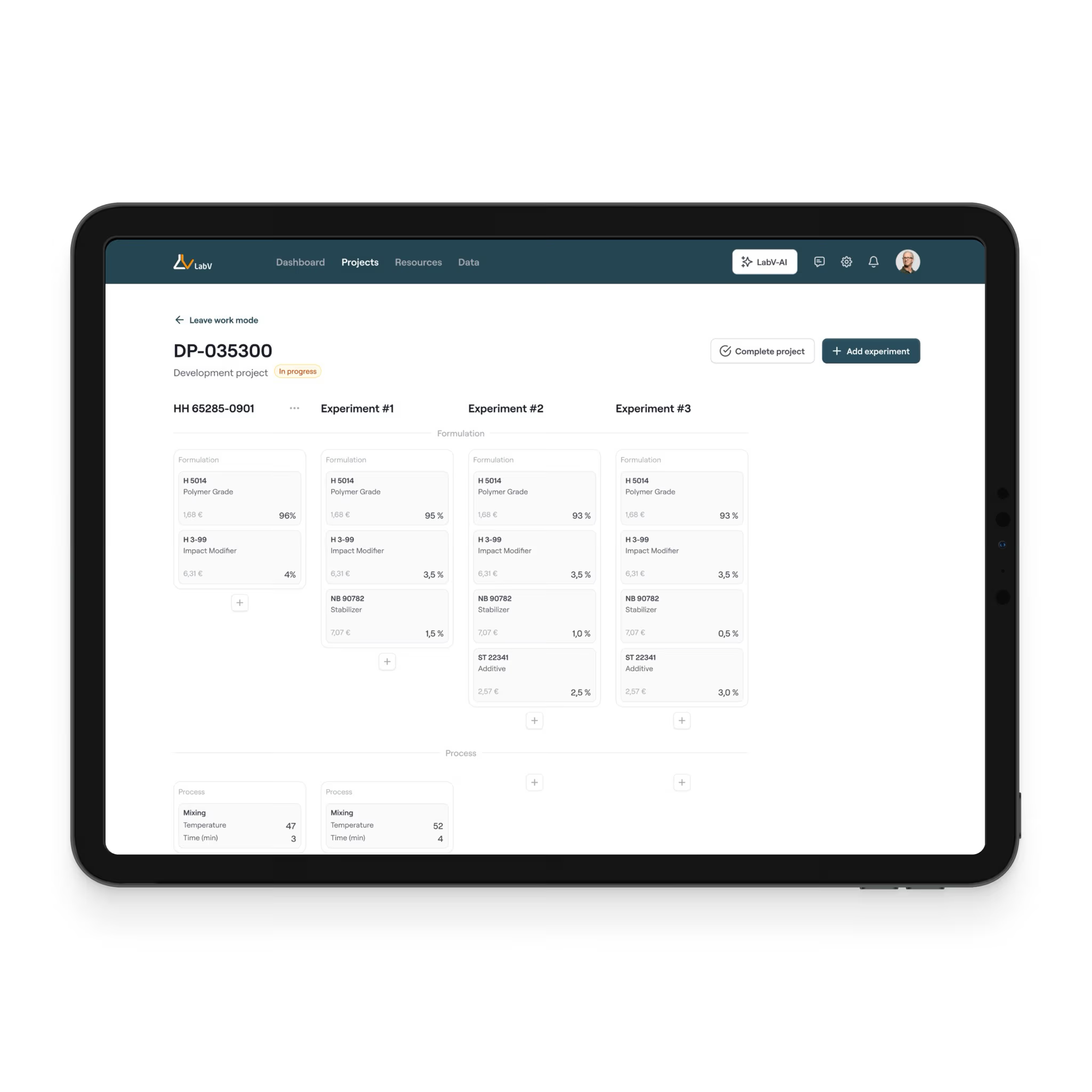
Adhesive formulations change constantly. New substrate combinations, modified process conditions or different curing profiles add further variants and test series. As a Material Intelligence Platform, LabV brings formulations, test values and trial results together in one shared data structure. Development teams assess variants on the same basis and decide transparently which formulation to take forward.

Where are the results from earlier trials?
Which formulation achieved the highest shear strength under thermal load? Has the lab already tested this combination of resin and hardener? In everyday lab work, questions like these often require lengthy searches because the data that could answer them is spread across many sources.
Formulations sit in Excel files, test reports exist as PDFs and measurement data in individual project folders. Comparing variants across projects becomes laborious, and some trials are run twice.
Why do formulation, substrate and test conditions belong together?
An adhesive always performs as part of a bonded joint. Substrate, surface pretreatment, curing and test method influence the measured strength just as much as the formulation does. Without this information, a test value loses its meaning.
An example: formulation A reaches 22 MPa in a lap shear test, formulation B 14 MPa. A was tested on grit-blasted aluminium at 23 °C, B on galvanised steel after water immersion at 60 °C. These two values alone cannot show which formulation performs better.
Test values only become comparable when substrate, surface pretreatment, curing, joint geometry, ageing and test standard match or are at least documented. The failure pattern provides a further clue: cohesive failure points to the formulation, adhesive failure to the bond with the substrate.
Structured data in formulation development
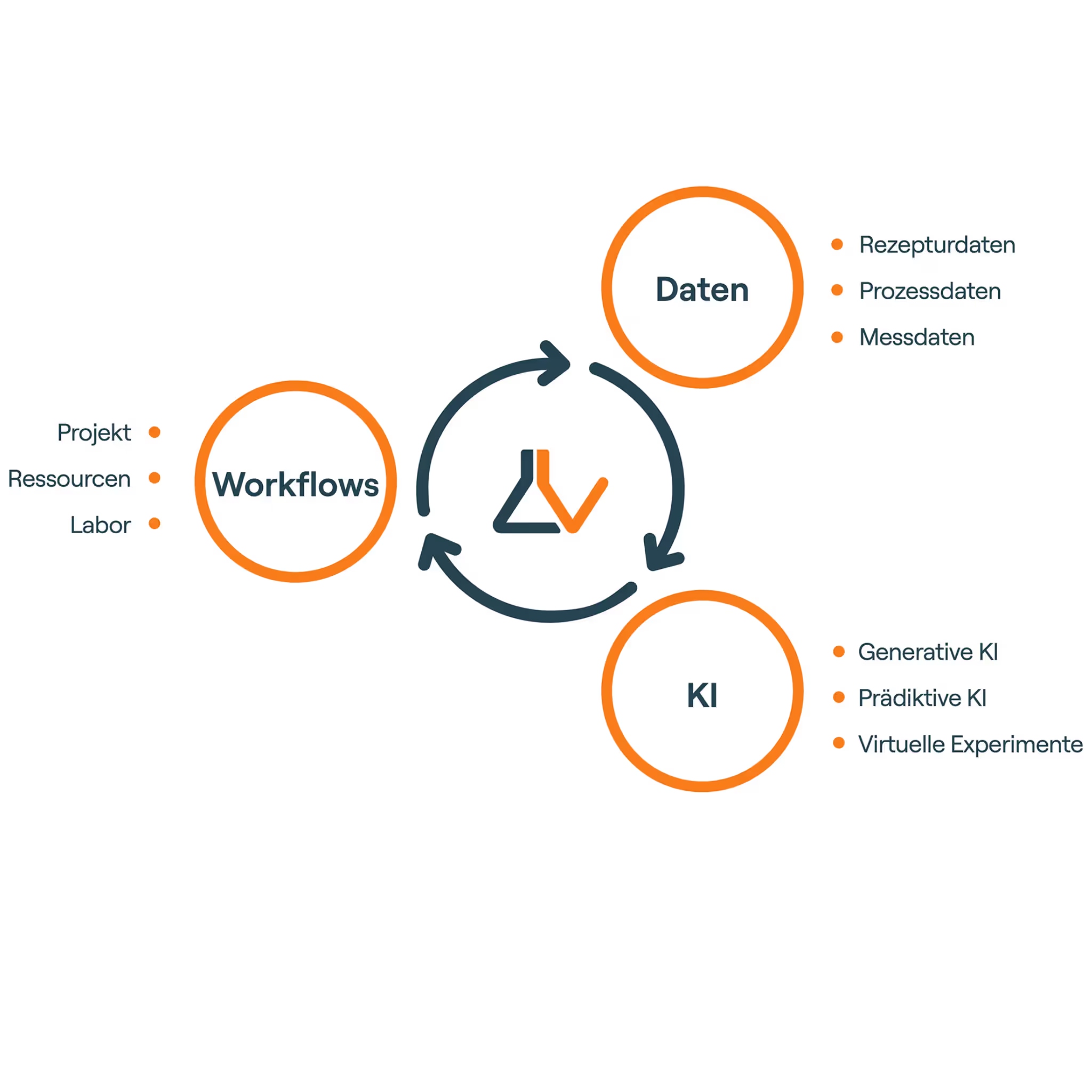
LabV brings formulations, process parameters and test values together in one central data structure. Every test value stays linked to its formulation version, raw material batches, substrate, surface pretreatment, curing and test method. Even years after the trial, it remains clear under which conditions a value was obtained.
For variant comparison, R&D teams filter results by substrate, test temperature or standard and see which differences actually stem from the formulation.
Formulation or process: where does the deviation come from?
Every change to formulation or process creates new data: mixing ratio, mixing time, pot life, curing profile, application conditions. LabV captures these process parameters together with measurement data and test results. When values look unusual, a later check can show whether the cause lies in the formulation or in the process.

Access test results directly from the formulation
Which formulation still performs at 80 °C? Which variant achieves higher peel strength on PP? These questions can be answered as soon as every test result is linked to its formulation. In LabV, variant comparison becomes part of the standard workflow. Existing Excel files and test reports can be imported, and every new test series adds to the shared database.

Recognising patterns in test series and justifying decisions
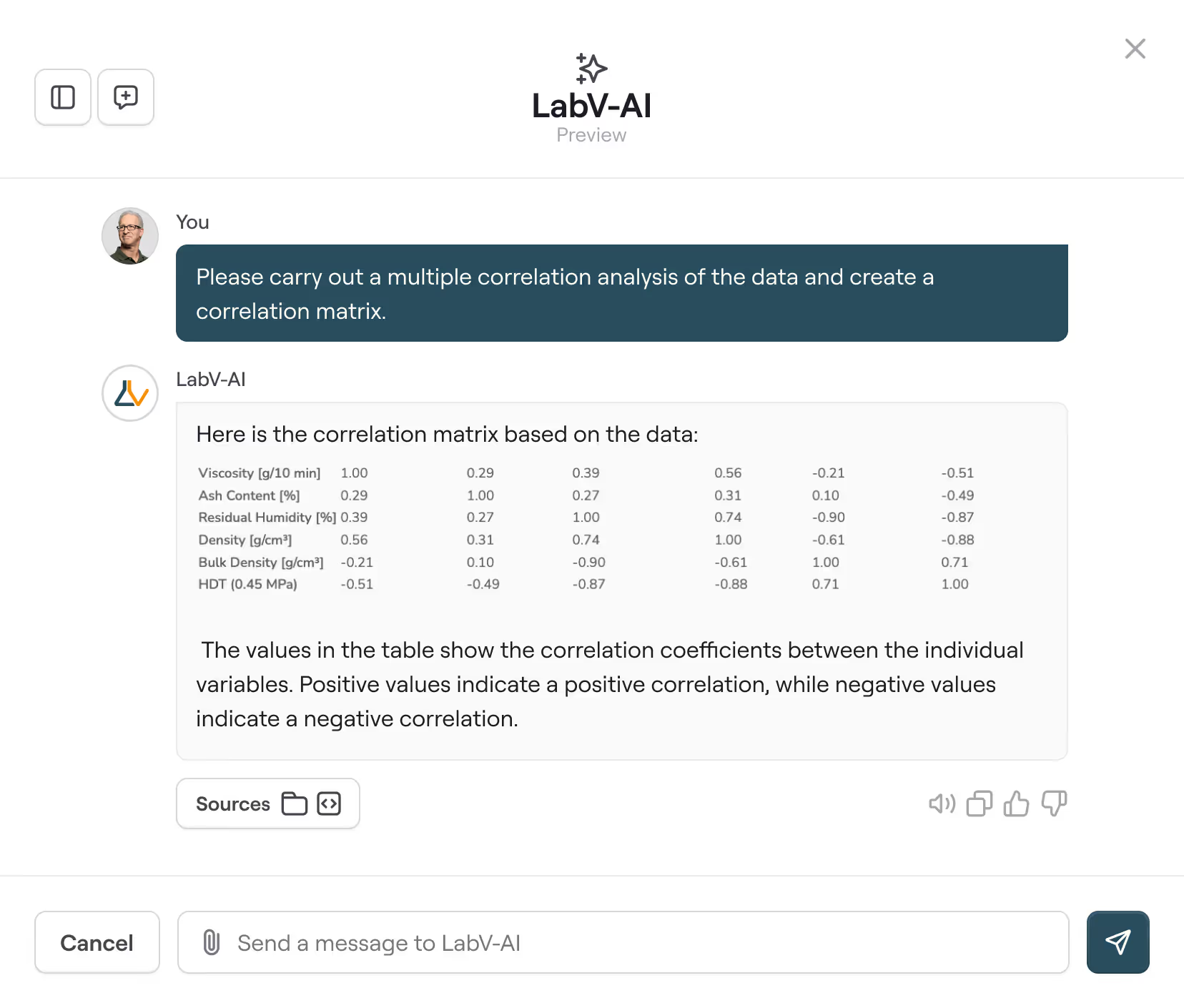
Working with structured data, the AI assistance in LabV helps recognise patterns in test series and highlights deviations between formulations. It shows, for example, which formulations perform reliably under specific test conditions or which variables correlate with strength.
Every analysis can be traced back to the underlying measurements. The technical assessment and the decision on the next variant remain with the experts in the lab.



See LabV at work in adhesives development
In a short demo session, the LabV team shows how formulations, test data and process parameters come together in adhesives development.