Compare coating formulations and steer development on solid data
Bring coating formulations, raw materials and test values together, compare variants and justify decisions.
LabV links coating formulations to raw materials, test conditions and test values such as viscosity, gloss level and adhesion. Development teams in the paints and coatings industry can see which variants have already been tested and how changes to binder, pigment or additive affect the properties of a coating.
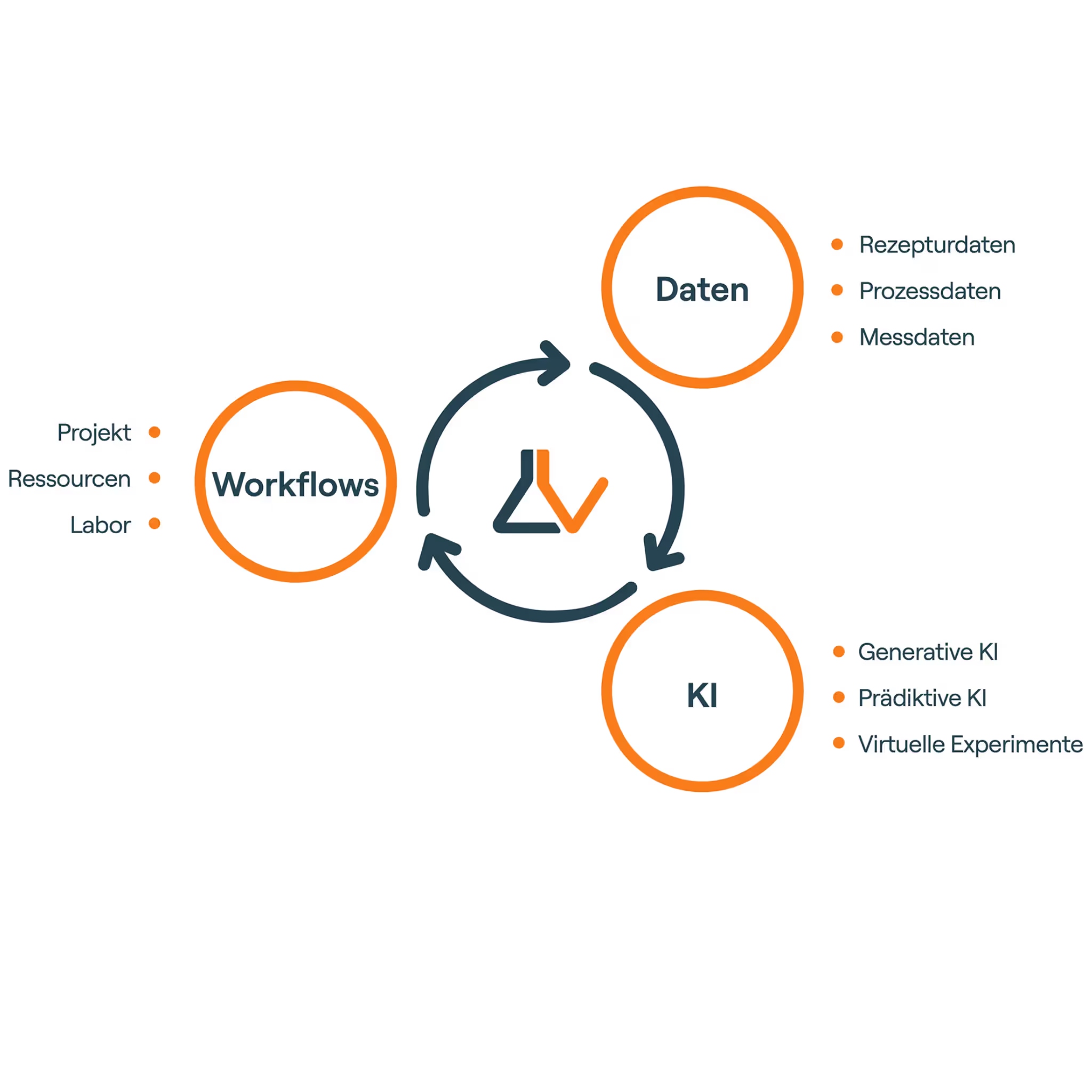
As a Material Intelligence Platform, LabV brings formulation data, test results and insights from completed projects together in one shared data structure.
Fragmented data, limited comparability
What gloss level did variant 12 reach? Has the formulation with reduced titanium dioxide content already been tested for hiding power? Which thickener changed viscosity the most? Questions like these come up every day in paint and coatings development.
The data that could answer these questions usually already exists. It is, however, spread across many places: formulations in Excel files, test reports as PDFs, colour measurements in instrument software and findings from earlier test series in individual project folders. Comparing results across projects takes hours, and some variants go through testing a second time.
The use case overview shows how R&D teams in other industries bring their laboratory data together.
All development data documented in one place
Binders, pigments, fillers and additives jointly determine the properties of a coating. A different dispersant can shift viscosity and gloss level, and a new filler can change wet scrub resistance.
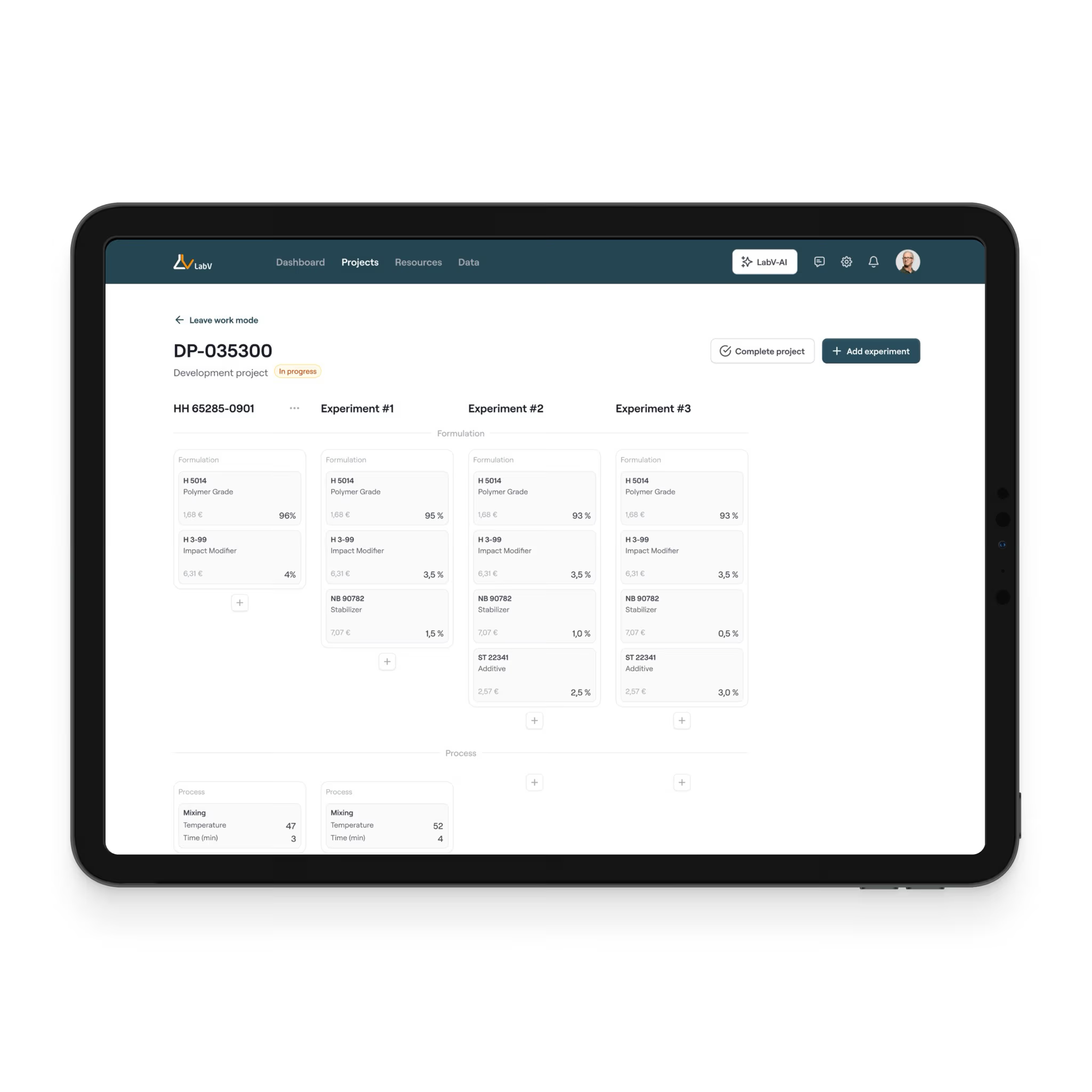
LabV stores every formulation version together with raw material batches, test method, test conditions and result. The ResourceHub manages raw materials, formulations and test methods as a versioned library. The DataHub connects test equipment and transfers measurements, for example from viscometers, gloss meters or spectrophotometers, directly into this structure.
Development teams can therefore assess coating formulations on complete data sets. Results can be filtered by substrate, film thickness or test standard, which makes it quicker to find the right starting formulation for the next test series. Existing Excel files and test reports can be transferred into LabV.
Why does a gloss or wet scrub value mean little without its test conditions?
Every test value comes from a specific formulation processed under specific conditions. Alongside binder and pigment, film thickness, substrate, drying time, climate and test standard also affect the result.
A simplified example: two emulsion paints reach classes 1 and 2 under EN 13300 when tested for wet scrub resistance to EN ISO 11998. If the first sample was tested after 28 days of drying and the second after only 7 days, the difference says little about the formulation.
Coating variants become comparable once film thickness, substrate, drying and test method match or are documented. For gloss, the measuring angle is part of the record: 20°, 60° and 85° give different values for the same sample. LabV records these details with every measurement.

What relationships does AI reveal in coatings test series?
AI supports the assessment. The team makes the decision.
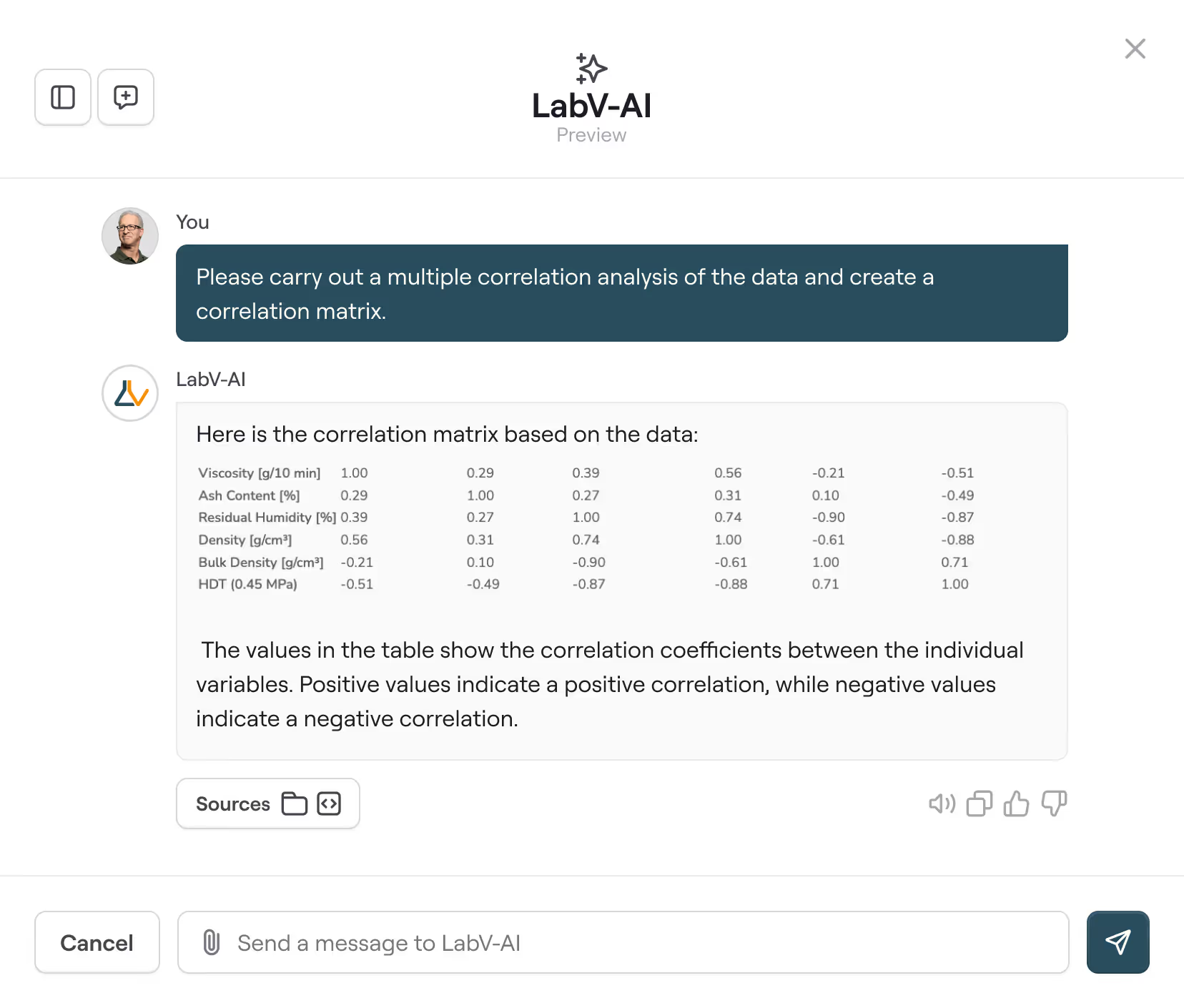
Working with linked data, the LabV AI Assistant shows relationships between formulation and result, for example between pigment volume concentration and hiding power, or between thickener content and viscosity. It puts deviations in extensive test series into context and helps prioritise formulations for the next round of testing.
Every analysis can be traced back to the underlying measurements. The technical assessment remains with the development team.
What changes when coating formulations are linked in one place?
More structure, less repetition.
A manufacturer of emulsion paints managed more than 8,000 formulations spread across different files and projects. After consolidation in LabV, more than 30,000 linked data points were available for comparing variants.
The time to the first approved formulation then fell to 4 to 6 days, down from 10 to 14. Repeat trials became less frequent, and new variants could be assessed faster because earlier results were accessible in a structured form for the first time.




See LabV at work in coatings development
In a demo session, the LabV team uses typical questions from the coatings lab to show how formulations, test values and knowledge about variants come together.